Serving Centennial, CO — 80122
Crawlspace Encapsulation & Repair in Centennial, CO
Centennial's 1980s and 1990s homes in the Southglenn and Arapahoe Road areas are reaching the age where original crawlspace systems show their first major failures. Denver Crawlspace Pros provides expert encapsulation and repair with same-week scheduling.
Call (970) 557-2269 — Free EstimateCentennial's Crawlspace Situation: A Newer Suburb with Aging Infrastructure
Centennial is one of the newest incorporated cities in the United States, having become a city in 2001, but its housing stock is not uniformly new. The Southglenn neighborhood and the areas along Arapahoe Road were developed primarily in the 1980s and 1990s — homes that are now 30 to 45 years old and showing the first wave of crawlspace system failures characteristic of that construction era.
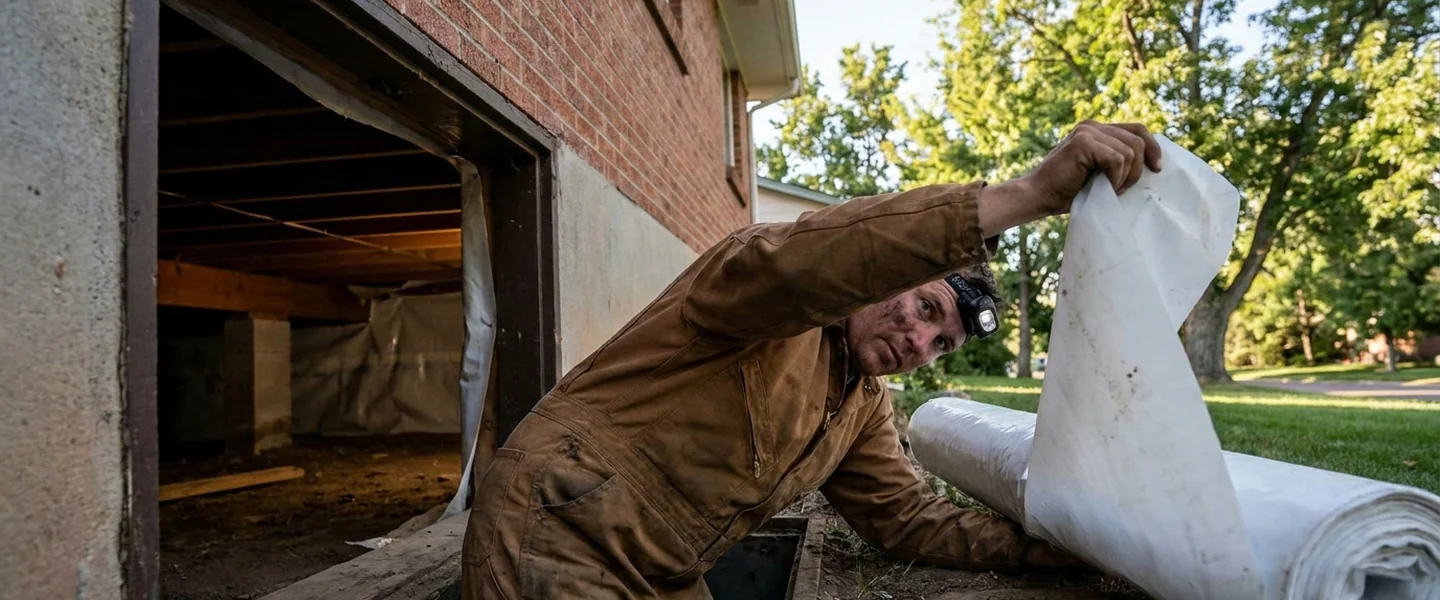
Homes built in the 1980s benefited from somewhat better vapor barrier specifications than those built in the 1950s and 1960s — 6-mil polyethylene was more common than the 4-mil plastic used in earlier decades. However, 6-mil barriers installed 35 to 45 years ago are now well into degradation territory. They have experienced hundreds of freeze-thaw cycles, been walked on during decades of maintenance access, and subjected to the ongoing vapor pressure from Colorado's soil conditions. By this point, most Centennial crawlspace vapor barriers have developed seam failures, tears at penetrations, and edge separations from the foundation walls.
What makes Centennial's situation somewhat different from older suburbs like Arvada and Lakewood is that the problems are less advanced — homeowners who act now can address crawlspace moisture before significant mold growth or structural damage has occurred, rather than remediating conditions that have been building for 50 or 60 years. Early encapsulation in a Centennial home is genuinely preventive, not just corrective.
Southglenn Neighborhood
The Southglenn area — surrounding the former Southglenn Mall site and extending north and south of Arapahoe Road — was developed as an upper-middle-class suburb in the 1970s and 1980s. Homes here tend to be larger than the ranch homes of Aurora or Arvada, with more complex floor plans and larger crawlspace footprints. Larger crawlspace areas require proportionally larger dehumidifier capacity — a factor we address in our load calculations for Southglenn projects.
The soil profile in Centennial trends toward sandy loam in higher-elevation areas and heavier clay in lower-elevation sections near Cherry Creek and its tributaries. The clay areas show more persistent moisture after precipitation events and represent the highest crawlspace moisture risk in the city. We note soil type observations during on-site assessments and factor them into vapor barrier and dehumidifier specifications.
What 30-Year-Old Crawlspaces Look Like in Centennial
In Centennial homes from the 1980s and early 1990s, we typically find:
- 6-mil polyethylene vapor barriers with seam separation along original overlaps — the tape or staples used to hold seams have let go over three-plus decades
- Foundation vents that are no longer airtight — the original vent covers have degraded and allow uncontrolled air infiltration
- Fiberglass batt insulation between floor joists that has absorbed moisture and begun to compress and fall from its fasteners
- HVAC flex duct in the crawlspace with condensation on exterior surfaces during high-humidity periods
- Occasional evidence of past pest activity — old rodent nesting materials in the insulation or along the perimeter
Unlike older homes in Arvada or Lakewood, Centennial crawlspaces at the 30-40 year mark typically do not yet show significant mold growth on structural framing — the moisture conditions have been suboptimal but not yet severe enough to establish active mold colonies in most cases. This makes Centennial an excellent market for preventive encapsulation that stops the progression before mold remediation becomes necessary.
Services Available in Centennial
- Preventive Encapsulation: Full 20-mil vapor barrier system installed before significant mold or structural damage has occurred. The most cost-effective crawlspace investment for Centennial homeowners.
- Vapor Barrier Upgrade: Replacement of existing 6-mil barrier with 20-mil reinforced system, properly seamed and wall-attached.
- Foundation Vent Sealing: Rigid foam insert and spray foam perimeter sealing for all existing foundation vents.
- Wall Insulation: R-10 rigid foam on foundation walls plus spray foam rim joist sealing. Brings Centennial homes to current IECC energy code requirements.
- Dehumidifier Installation: Altitude-rated unit sized for Centennial crawlspace square footage. Dedicated circuit and condensate plumbing included.
Why Centennial Homeowners Should Act Now
Centennial's crawlspace situation is unusual among Denver suburbs — the homes are old enough to have significant vapor barrier degradation, but not so old that the problems have typically progressed to severe mold or structural damage. This window represents an opportunity for proactive encapsulation that costs substantially less than remediation after conditions have worsened. Homeowners who encapsulate now in Centennial are preventing the mold remediation, structural repair, and multiple-generation barrier replacement costs that Englewood and Arvada homeowners frequently face when they wait too long. Denver Crawlspace Pros can assess exactly where your Centennial crawlspace stands in that progression and recommend the appropriate scope — from a targeted vapor barrier upgrade to a full encapsulation system — based on what we find.
Serving Centennial, CO — 80122
Southglenn, Arapahoe Road corridor, and all Centennial neighborhoods. Free on-site assessment with same-week scheduling.
Call (970) 557-2269 — Free Estimate